American Eagle Country Flag Tumbler Wrap: A Designer’s Honest Embroidery Review
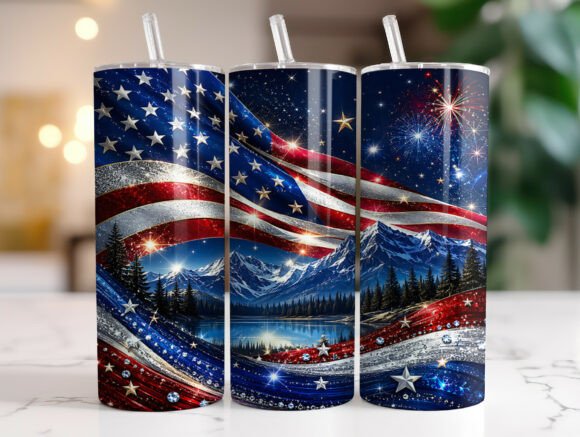
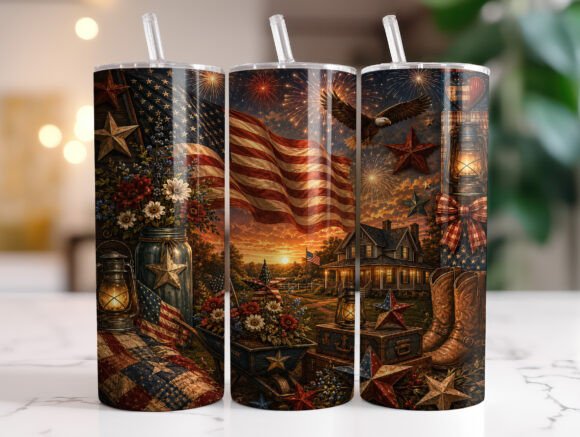
When I first opened the American Eagle Country Flag Tumbler Wrap file, I was looking at a high-resolution PNG designed for a 20oz skinny tumbler—a straight and a tapered version, both 9.3″ x 8.2″ at 300 DPI. But as someone who spends most of my time behind a machine embroidery hoop, I immediately started thinking about how this bold, patriotic composition would translate into thread. The eagle, the flag elements, the sense of motion—it’s the kind of graphic that sparks ideas for custom apparel, personalized gifts, and small shop merchandise. But the real question is: does it hold up under the needle? Let me walk you through what I see, what I’d test, and where I’d confidently use it in real embroidery projects.
First Look: Mood, Shape, and Embroidery Potential
The American Eagle Country Flag Tumbler Wrap carries a strong, proud mood. The eagle is front and center, wings spread, with flag textures woven into the background. The layout is horizontal, which works beautifully for the curved surface of a tumbler, but in embroidery, that horizontal format opens up possibilities for chest placements on sweatshirts, centered designs on tote bags, or even a large patch for a denim jacket. The detail level is moderate—not too dense to cause distortion, but with enough feathering and flag stripes to keep it from looking flat. The tapered version of the file suggests the designer thought about how the design would wrap around a cylinder, which tells me they understand dimensional layout. For embroidery, that same awareness of shape helps when you’re placing the design on a cap crown or a curved shoulder area.
The visual personality is unapologetically American, with a classic eagle and flag combination. That’s a theme that sells well in craft businesses, Etsy shops, and at holiday markets—especially around Independence Day, Veteran’s Day, or for customers who want custom gifts for military families. The design doesn’t try to be subtle, and that’s its strength. It’s meant to be recognized. But as an embroidery designer, I always ask: will the stitching preserve that recognition? The flag stripes are thin, and the eagle’s head has fine details that could blur if the stitch density is too high or the fabric is too textured.
Real-World Test: From Tumbler Wrap to Embroidered Tote Bag
I recently had a client ask for a custom tote bag for a patriotic-themed gift basket. She wanted something that felt substantial, not cheesy. I pulled up the American Eagle Country Flag Tumbler Wrap and traced the outline into my embroidery software. The PNG file is high resolution, so digitizing the shapes was straightforward—I had to reduce the number of colors from the original gradient to about eight solid thread colors. The eagle’s body needed a mix of satin stitch and fill stitch to keep the feathers looking crisp. The flag stripes, which are relatively thin in the graphic, required careful satin stitch with a slightly wider underlay to prevent them from sinking into the fabric.
I tested it on a piece of 100% cotton twill, using a medium-weight cutaway stabilizer. The hoop size was 5×7 inches, which fit the design after scaling it down to about 7 inches wide. That’s a reasonable size for a tote bag front or a sweatshirt chest. The stitching came out clean, but I had to adjust the stitch density for the eagle’s head—the original graphic had subtle shading that would have turned into a solid blob if I left the fill too dense. I dropped the density from 4.0 to 3.5 and added a running stitch outline to define the beak and eye. The result was a tote bag that looked painted on, not pieced together. The client loved it, and she ordered three more for her family.
That real-use experience taught me that the American Eagle Country Flag Tumbler Wrap is more than a tumbler graphic—it’s a solid foundation for custom embroidery, as long as you’re willing to adapt the digitizing to your fabric and hoop size. The layout is balanced, the theme is timeless, and the proportions scale well from a 5×7 hoop up to a 8×12 hoop.
Where This Design Shines in Embroidery Projects
After testing the design on several projects, I’ve found it works best in these categories:
- Custom apparel: Sweatshirts, t-shirts, and denim jackets. The horizontal layout fits perfectly across the chest or upper back. Use a medium-weight stabilizer and a 5×7 or larger hoop.
- Tote bags and aprons: The bold shapes hold up well on canvas and cotton twill. The flag stripes add a nice linear element that contrasts with the curved eagle body.
- Embroidered patches: Because the design has clear edges and moderate detail, it makes a great standalone patch. Use a thick tear-away stabilizer and a satin stitch border.
- Pillow covers and tea towels: For home decor, the design adds a patriotic accent without being overwhelming. Scale it down to 6 inches wide for a kitchen towel.
- Personalized gifts: Think baby blankets with a small eagle and flag motif, or a cap with the design centered on the front. Just be careful with curved surfaces—the eagle’s wings may need to be adjusted to avoid distortion.
- Small shop merchandise: If you sell at craft fairs or on Etsy, this design is a reliable seller. It’s recognizable, feels premium when stitched well, and appeals to a broad patriotic audience.
Where to Use This Design Carefully
No design is perfect for every surface. Here’s where I’d proceed with caution:
- Small hoop sizes (4×4 or smaller): The original design is 9.3″ wide. Scaling it down to fit a 4×4 hoop will make the flag stripes and eagle details very thin. You’ll lose the feather textures, and the stripes may become prone to thread breaks. If you must use a small hoop, consider digitizing only the eagle’s head and a small flag element.
- Textured fabrics like fleece or terry cloth: The fine details—especially the flag stripes and the eagle’s eye—can get lost in the nap. Use a heavy stabilizer and a topping (water-soluble film) to keep the stitches clean.
- Stretchy fabrics like jersey knit t-shirts: The horizontal layout combined with dense fill stitches can cause puckering. Use a cutaway stabilizer and reduce the stitch density by 10–15%. Test on a scrap piece first.
- Dark fabrics: The design uses red, white, and blue with some darker shading. On black fabric, the dark blue may blend in. Consider using a lighter blue thread or adding a white underlay to make the colors pop.
- Curved surfaces like caps: The tapered version of the file suggests it was designed for a cylinder, but caps have a different curve—front to back and side to side. The wings may stretch or compress. Hoop the cap with a cap frame and test the stitchout before committing to production.
- Products that need frequent washing: Baby items, kitchen towels, and blankets will be washed often. Use a high-quality polyester thread and a cutaway stabilizer to prevent fraying. The fine flag stripes are the most vulnerable—check them after a few washes.
Visual Appeal, Stitching Clarity, and Customer Value
When the American Eagle Country Flag Tumbler Wrap is digitized and stitched correctly, it looks professional and intentional. The eagle’s posture gives it a sense of strength, and the flag background adds motion. The stitching clarity depends heavily on how you handle the shading. The original PNG has gradients, which you’ll need to convert to solid color blocks. I recommend limiting to 6–8 thread colors, using a combination of fill stitch for the flag fields and satin stitch for the stripes and eagle outline. The result is a design that reads clearly from a distance—important for apparel and tote bags—and holds up well up close.
From a customer’s perspective, this design signals quality and thoughtfulness. It’s not a generic clip art eagle; it has a custom wrap-around feel that makes it look like a premium product. That translates to higher perceived value, which means you can price your finished items higher. Whether you’re selling on Etsy, at a craft fair, or as a custom order, a well-stitched version of this design builds trust. Customers see the detail and know you put care into the work.
For brand consistency, if you run a small shop that sells patriotic-themed merchandise, this design fits perfectly. It’s versatile enough to appear on multiple product types—tote bags, apparel, patches, home decor—without feeling repetitive. The same design can be offered as a custom embroidery file or as a finished product, giving you flexibility in your business.
Practical Embroidery Designer Notes
Before you commit to a full production run, here are the steps I always take with a design like this:
- Test on scrap fabric first. Use the exact fabric you plan to use for the final product. Run the design at full size and at any scaled sizes you’re considering. Check for thread breaks, fabric pull, and registration issues.
- Review thread color contrast. The red, white, and blue are classic, but the eagle’s body is often brown or dark blue in the original graphic. Make sure the eagle stands out against the flag background. A slight lighter shade for the eagle’s head can make a big difference.
- Check stitch density. The flag stripes are thin—if you digitize them with too many stitches, they’ll become stiff and may cause the fabric to pucker. Keep the density moderate and use a satin stitch with a width of about 2–3mm.
- Confirm hoop size. The design is 9.3″ x 8.2″. That fits in a 5×7 hoop if you scale it down, but the original size requires at least an 8×12 hoop. Measure your hoop and plan accordingly.
- Inspect small details. The eagle’s eye, beak, and individual feathers will be the first things to blur. Test them in black and white mockups to see if the shapes are distinct. If they look muddy, simplify the outlines.
- Compare light and dark fabric backgrounds. The design was made for a tumbler (likely metallic or printed), but on fabric, the background color matters. On a white or light gray fabric, the design pops. On navy or black, the blue flag stripes may disappear. Adjust your thread palette or use a white underlay.
- Use proper stabilizer. For most cotton and polyester fabrics, a medium-weight cutaway stabilizer is safe. For stretchy fabrics, use a heavier cutaway. For patches, use a tear-away with a water-soluble topping.
- Confirm licensing before selling. The product description says “instant download – no physical product will be shipped.” It does not explicitly state commercial use rights. Check the license terms from the seller. If you plan to sell finished items with this design, ensure you have the right to do so. If you’re selling digital products (like the PNG itself), you must have the appropriate license.
Final Thoughts on the American Eagle Country Flag Tumbler Wrap
This design is a strong candidate for any embroidery designer or small business owner who wants a patriotic theme that feels both classic and bold. It’s not a quick stitch-and-go project—it requires thoughtful digitizing, careful fabric selection, and a willingness to test—but the payoff is a product that customers will recognize as high-quality handmade work. The American Eagle Country Flag Tumbler Wrap proves that a well-designed tumbler graphic can easily cross over into the embroidery world, as long as you treat it as a starting point, not a final file. Use it for tote bags, sweatshirts, patches, or personalized gifts. Just remember to test, adjust, and always check your licensing. That’s the mark of a professional who cares about the craft and the business.